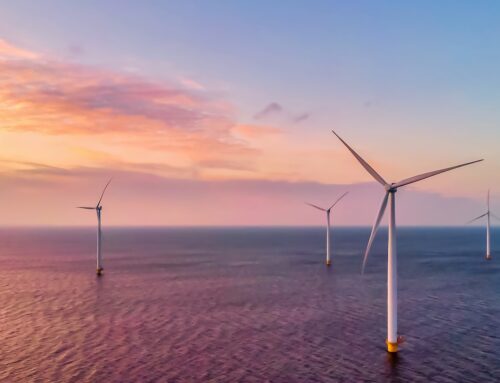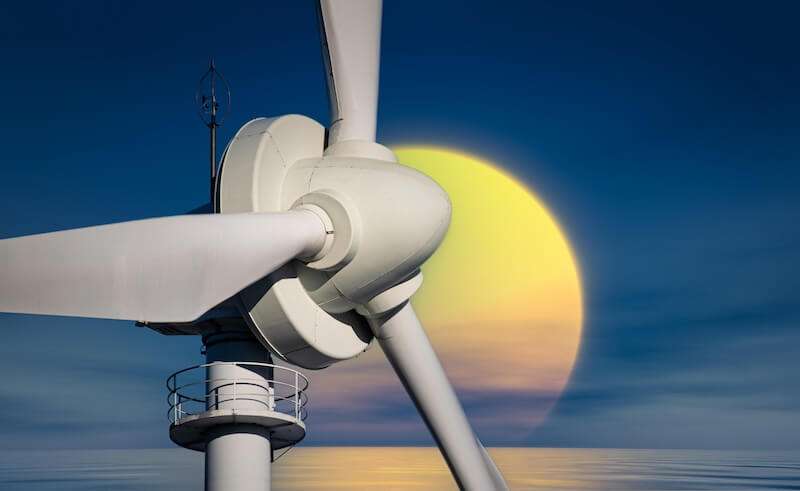
Wind turbines have become one of the most recognisable symbols of the transition towards renewable energy, but the technology behind them is anything but static.
Engineers around the world are redesigning almost every aspect of the conventional wind turbine, from blades and generators to towers, foundations and even the fundamental question of whether a turbine needs blades at all.
A recent article from OilPrice.com highlights just how rapidly the technology is developing. Global wind energy additions are expected to reach around 160 GW during 2026, demonstrating the enormous scale at which wind remains part of the international energy mix.
Bigger, taller and smarter
One of the most obvious changes is scale.
Modern turbines increasingly use larger but lighter rotor blades capable of capturing more energy, including at lower wind speeds. Towers are becoming taller to access stronger and more consistent winds, while individual turbines can now exceed 15 MW of generating capacity.
Technology is also becoming more intelligent.
Sensors and actuators can adjust blade angles in real time to improve energy production, while developments in monitoring and engineering are helping operators understand the condition and performance of increasingly complex assets.
But increasing scale inevitably creates new challenges.
Installation, lifting operations, working at height, access, inspection, maintenance, pressure systems, asset integrity and emergency planning all become increasingly important as turbines grow larger and projects move further offshore.
Floating wind could change the geography of the industry
Perhaps one of the most significant areas of innovation is floating offshore wind.
Much of the world’s offshore wind potential lies in water deeper than 60 metres, where conventional fixed-bottom turbines become difficult or uneconomic to install.
Floating platforms could allow developers to access these deeper waters.
Engineers are therefore working on lighter generators, improved floating structures and technologies designed to reduce installation and maintenance costs. The EU-funded LIGHTWIND project, for example, has supported development of a 15 MW generator designed to be lighter, cheaper and easier to repair.
This isn’t an unfamiliar environment for HSEQ-360 Limited.
Our team has already supported some significant organisations and projects across the offshore wind industry.
For Kincardine, HSEQ-360 Limited created a management system to facilitate the Operations and Maintenance phase of what was, at the time, the world’s largest floating offshore wind farm, alongside providing HSEQ management and asset walkdowns.
For Buchan Offshore Wind, HSEQ-360 Limited has undertaken a desktop management system audit for a floating offshore wind development.
And our work extends across a substantial part of the wider offshore renewables sector.
From London Array to Ørsted
At London Array, HSEQ-360 Limited provides HSEQ, CDM and Asset Integrity support across 175 turbines and two offshore substations, including special-project client representation.
For Ørsted, our Chartered team has authored Written Schemes of Examination under LOLER and PSSR across its UK offshore wind portfolio. The work covers equipment including service lifts, davit cranes, pressure systems and turbine-mounted safety equipment.
HSEQ-360 Limited has also provided HSEQ support to Enbridge’s European offshore wind portfolio, HSEQ and project management auditing for Inch Cape Offshore Wind, project execution and HSEQ support for Maple Power’s offshore wind projects across Europe, and HSEQ support to Reventus Power’s global offshore wind portfolio.
Our experience also includes reviewing corporate HSEQ management arrangements for Northland Power, developing management systems across fabrication and offshore services for RMi Renewables, creating Construction Phase Plans and Health and Safety Files for RTS Wind UK, and supporting TRAC Renewables with Fit for Offshore Renewables programme deliverables and wider HSEQ development.
That breadth of experience matters because the next generation of wind technology will demand more than innovative engineering.
It will demand equally innovative approaches to managing risk.
What comes after the three-bladed turbine?
Some emerging concepts go considerably further.
An airborne wind energy system has already been tested at an altitude of around 2,000 metres in China, effectively operating as an airborne power station and transferring electricity back to the ground.
Meanwhile, Vortex has developed a bladeless turbine that generates electricity through oscillation rather than conventional rotating blades, potentially opening opportunities in environments where traditional turbines would be unsuitable.
Not every experimental technology will ultimately reach commercial scale.
But they demonstrate something important about the renewable energy industry: innovation isn’t slowing down.
As designs evolve, the methods used to construct, operate, inspect and maintain them must evolve too.
Innovation needs robust HSEQ management
A 15 MW offshore turbine presents different challenges from an earlier generation of machines.
Floating assets introduce different considerations from fixed-bottom structures.
New inspection technologies change how maintenance programmes can be delivered.
Larger components affect lifting strategies, marine logistics, access arrangements and emergency planning.
And increasingly complex supply chains require robust quality assurance and supplier evaluation.
This is where HSEQ cannot simply be something added to a project after the engineering decisions have been made.
It needs to be embedded throughout the project lifecycle.
HSEQ-360 Limited provides specialist support across Health, Safety, Environmental, Quality, Operations and Engineering, including CDM Regulations, client representation, environmental management, project management, quality assurance, supplier evaluation, sustainability initiatives and Written Schemes of Examination under PSSR and LOLER.
Our Chartered professionals combine experience of highly regulated industries with a pragmatic understanding of how projects actually operate in the real world.
From established offshore wind farms to floating wind developments and the technologies that may define the next generation of renewable energy, one principle remains constant:
Better engineering demands better systems, better risk management and better HSEQ.
The wind turbine is being reinvented.
At HSEQ-360 Limited, we are already supporting the offshore wind industry as it evolves, bringing experience from renewable energy and other highly regulated sectors to some of the challenges shaping its future.
From established offshore assets to floating wind and emerging technologies, our role is to help ensure innovation is supported by robust systems, effective risk management and practical HSEQ expertise.
Because as renewable energy technology evolves, the way we manage its risks must evolve with it.
Contact Steve and the team today to find out more about our services and expertise.