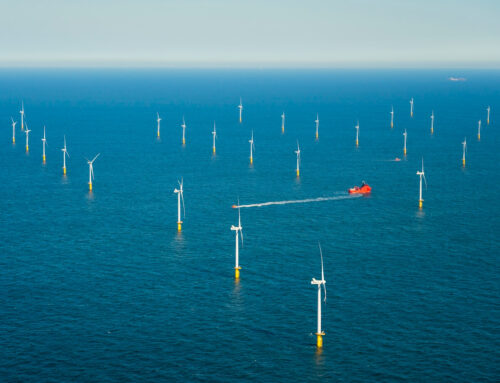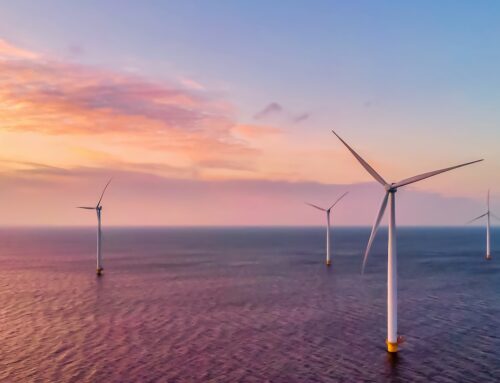
Offshore wind is already one of the defining engineering achievements of the energy transition. But the next stage of its development could take the industry into considerably deeper waters.
Floating offshore wind is moving rapidly from an emerging technology towards a potentially significant part of the global renewable energy mix.
Unlike conventional offshore wind turbines, which are fixed to foundations secured to the seabed, floating turbines sit on platforms anchored using mooring systems, as we all well know. This allows projects to move into deeper waters where traditional fixed-bottom foundations become impractical.
The opportunity is enormous.
Floating offshore wind currently represents only a small proportion of installed offshore wind capacity, but the global development pipeline points towards potentially significant expansion over the coming decades.
From experiment to offshore industry
The idea has developed over several decades, drawing heavily on technologies and engineering experience already established within the offshore oil and gas sector.
- 1990s: significant research into floating offshore wind platforms begins as engineers explore ways of taking turbines beyond the practical limits of fixed foundations
- 2007: one of the earliest floating wind prototypes is deployed off the coast of Italy, demonstrating the basic principle at sea
- 2009: the 2.3MW Hywind Demo is installed off Karmøy, Norway, becoming the world’s first full-scale floating wind turbine
- 2017: Hywind Scotland begins generating electricity off Peterhead, becoming the world’s first floating wind farm, with five turbines and 30MW of capacity
- 2020: WindFloat Atlantic becomes operational off Portugal, demonstrating an alternative semi-submersible floating platform design
- 2021: Kincardine, off the coast of Aberdeenshire, becomes another major step forward in commercial-scale floating wind, a company we work closely with (https://hseq-360.co.uk/projects/)
- Today: floating offshore wind is developing from individual demonstration projects towards larger commercial developments planned around the world
What began with individual experimental turbines has therefore developed into an international industry with increasingly ambitious plans for commercial-scale deployment.
From oil and gas to renewable energy
The offshore energy industry has spent decades learning how to design, construct, install, inspect and maintain infrastructure capable of operating in some of the world’s most challenging marine environments.
Floating wind is now drawing heavily on that experience.
Floating structures, mooring systems, subsea infrastructure, dynamic cables, marine operations and offshore inspection are all areas where knowledge developed within oil and gas can potentially be transferred into renewable energy.
For experienced offshore professionals, that creates a significant opportunity.
The energy transition isn’t simply about replacing one technology with another. It is also about transferring decades of engineering expertise, operational knowledge and safety culture into the infrastructure that comes next.
Bigger projects bring bigger HSEQ challenges
Moving turbines further offshore and into deeper water inevitably creates new challenges.
Construction and installation become more complex; access becomes more difficult and weather windows become increasingly important. Inspection, maintenance and repair strategies must account for assets operating in demanding and often remote environments.
That places Health, Safety, Environment and Quality at the centre of successful project delivery.
From fabrication and port operations through to offshore installation, commissioning, inspection and long-term maintenance, floating wind will require experienced people capable of identifying risk and maintaining standards throughout the asset lifecycle.
There is also a significant supply-chain challenge.
If floating wind develops at the scale currently anticipated, the industry will require ports, fabrication facilities, specialist vessels, subsea capability and a skilled workforce capable of delivering projects safely and consistently.
Engineering the transition
There are still substantial obstacles.
Floating offshore wind remains considerably more expensive than established fixed-bottom technology, and commercial-scale deployment will depend on costs falling as technology matures and supply chains expand.
However, floating wind offers something fixed-bottom offshore wind cannot easily provide: access to vast areas of deeper water with potentially strong and consistent wind resources.
For countries with deep coastal waters, that could significantly increase the areas available for offshore renewable energy generation.
For companies operating across offshore energy, renewables and major infrastructure, floating wind also demonstrates how closely the future of renewable energy remains connected to the engineering expertise developed by the industries that came before it.
Experience matters offshore
The technology may be evolving, but many of the fundamentals of successful offshore project delivery remain familiar.
Planning, competency, risk assessment, quality assurance, environmental management and strong safety leadership are essential whether a project involves traditional offshore energy infrastructure or the latest generation of floating wind technology.
At HSEQ-360 Limited, we understand that major energy projects depend on more than technology alone.
They depend on competent people, robust processes, effective risk management and an uncompromising approach to health, safety, environmental performance and quality.
As floating offshore wind moves from demonstration projects towards commercial-scale deployment, those fundamentals will become more important than ever.
Talk to HSEQ-360 Limited
Delivering an offshore, renewable energy or major infrastructure project? HSEQ-360 Limited provides the experience and expertise to help organisations manage risk, maintain standards and deliver safely.
https://hseq-360.co.uk/contact-us/
Source and further reading
Financial Times, The next frontier in renewables: floating wind turbines, September 2026.
https://www.ft.com/content/d29d0e83-8580-4d8b-bc3e-c6e81267ff2c?syn-25a6b1a6=1