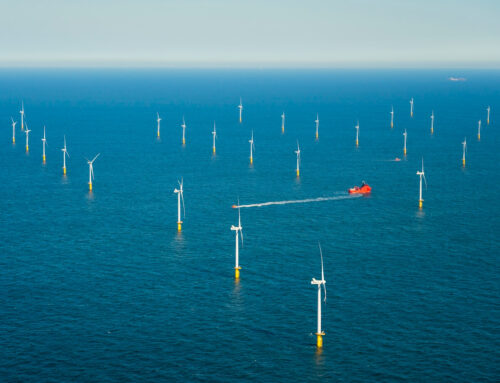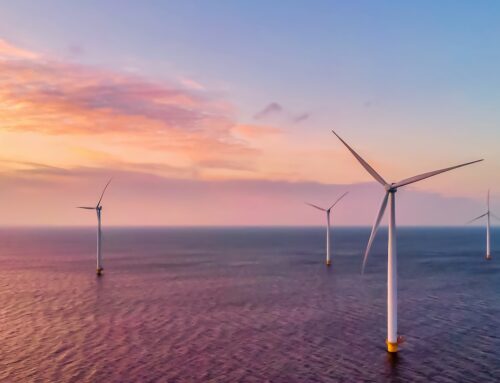
The Democrats’ sweeping victory in the 2026 US midterm elections has delivered a potential lifeline to America’s renewable energy industry, particularly offshore wind, after nearly two years of political hostility from the Trump administration.
With Democrats securing control of both the Senate and House of Representatives, renewable energy investors are cautiously optimistic that the political headwinds facing the industry could begin to ease.
Trump’s war on windmills
Donald Trump has made no secret of his dislike of wind energy.
His repeated attacks on wind turbines, often dismissively referring to them as “windmills”, have included describing wind farms as “ugly, costly and inefficient”.
But his opposition has gone well beyond rhetoric.
The administration has intervened in major offshore wind developments, including Ørsted’s multibillion-dollar Revolution Wind project off the northeastern US coast, issuing stop-work orders that have disrupted construction and undermined investor confidence.
Combined with rising interest rates, supply chain pressures and escalating development costs, the political uncertainty has created a difficult environment for offshore wind.
Renewable energy shares surge
Financial markets responded immediately to the election results.
Shares in Danish offshore wind giant Ørsted climbed almost 10% before closing nearly 5% higher. Other European renewable energy companies, including EDP Renewables, Engie and RWE, also recorded gains.
The reaction reflects growing expectations that Democratic control of Congress could protect renewable energy tax incentives, challenge regulatory intervention and provide greater certainty for developers.
The stakes are considerable.
The United States has approximately 388 gigawatts of installed renewable energy capacity, enough to power more than 83 million homes, while the sector directly employs over 400,000 people.
Renewables now account for approximately 30% of US electricity generation.
Offshore wind still faces significant challenges
The election result does not mean an immediate reversal of Trump’s energy policies.
The president retains considerable executive authority, and offshore wind developers must still contend with high construction costs, financing pressures, permitting delays and infrastructure constraints.
Meanwhile, soaring electricity demand from artificial intelligence and data centres is increasing pressure on America’s energy infrastructure.
Meeting that demand will require substantial investment in generation, transmission and storage.
Offshore wind has a potential role to play, provided developers can secure the financial and regulatory confidence needed to deliver projects.
What does this mean for HSEQ?
For the offshore renewables supply chain, renewed investment would bring fresh opportunities alongside significant operational responsibilities.
Offshore wind construction involves complex marine operations, heavy lifting, working at height, electrical hazards and challenging environmental conditions.
Effective health, safety, environmental and quality management must remain central to project planning, contractor assurance, construction and commissioning.
Environmental protection, workforce competence and regulatory compliance are equally critical to successful delivery.
A new direction for American renewables?
The midterm results represent an important shift in the political landscape, although whether they translate into lasting improvements for offshore wind remains to be seen.
For an industry accustomed to long investment cycles, regulatory certainty matters far more than political rhetoric.
At HSEQ-360 Limited, we recognise that the future of offshore renewables depends not simply on political support or investment, but on delivering complex energy infrastructure safely, responsibly and to the highest standards.
America’s offshore wind industry may finally have some breathing space. The challenge now is turning renewed confidence into projects that actually get built.