Norfolk and Suffolk have always done things on a grand scale.
Think of the big skies stretching across open countryside or the vast waterways of the Norfolk Broads. Consider the magnificent Norman cathedral in Norwich, its 96-metre spire dominating the city’s skyline and its construction made all the more remarkable by the use of stone shipped across the English Channel from Caen in Normandy more than 900 years ago.
Then there’s the imposing Norman keep of Norwich Castle, also built using a lot of imported Caen stone, the Jacobean grandeur of Blickling Hall, the medieval splendour of St Edmundsbury Cathedral in Bury St Edmunds and the extraordinary industrial scale of Sizewell B on the Suffolk coast.
These are counties with an impressive architectural, engineering and industrial heritage.
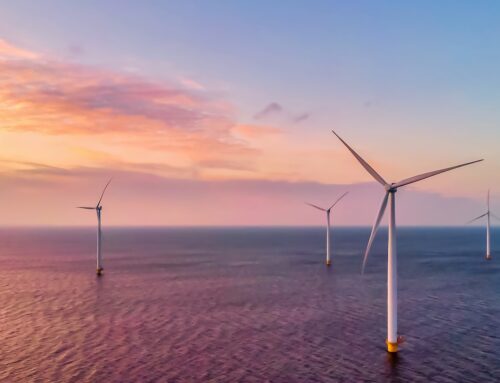
Now, approximately 69 kilometres off the Suffolk coast, something truly enormous is taking shape.
The £4 billion East Anglia THREE offshore wind farm is one of the UK’s most ambitious renewable energy developments, demonstrating that East Anglia’s reputation for thinking big extends well beyond its landscapes and historical landmarks.
Big turbines and bigger ambitions
Developed by ScottishPower Renewables, part of the Iberdrola Group, in partnership with Masdar, East Anglia THREE will feature 95 offshore wind turbines across approximately 305 square kilometres.
With a generating capacity of 1,400 megawatts, the development is expected to produce enough renewable electricity to supply approximately 1.3 million UK homes.
The engineering figures are remarkable.
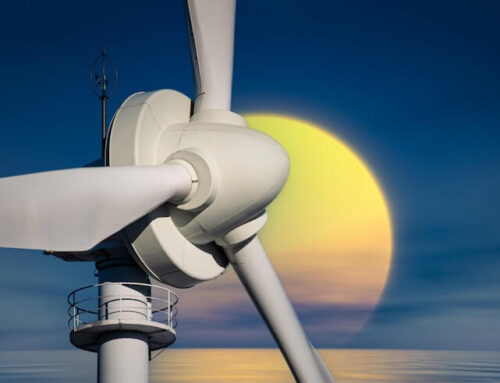
Each turbine features blades measuring 115 metres, longer than a professional football pitch. The turbines themselves will reach approximately 262 metres above sea level.
That’s more than two and a half times the height of Norwich Cathedral’s famous spire.
In August 2026, the project reached a significant milestone with the completion of all 95 turbine foundations.
The enormous steel monopiles weigh between 1,200 and 1,800 tonnes each, representing an extraordinary feat of offshore engineering.
Big engineering demands meticulous planning, specialist expertise and effective management systems.
Big opportunities for Norfolk and Suffolk businesses
East Anglia THREE represents far more than a substantial investment in renewable electricity.
The development is supporting employment, specialist engineering, manufacturing, construction, logistics and supply chain opportunities.
Approximately 2,300 jobs are expected to be supported during construction, demonstrating the economic importance of major renewable energy projects.
Businesses in Great Yarmouth, Lowestoft, Norwich, Ipswich and across the wider East Anglian region are well placed to benefit from the continued expansion of the offshore energy sector.
But growth also brings responsibilities.
Organisations working within major infrastructure supply chains must demonstrate effective management of health and safety, environmental performance and quality.
For businesses seeking new contracts, recognised management standards can help demonstrate competence, consistency and a commitment to continual improvement.
Big projects demand high health and safety standards
Whether constructing offshore turbines, manufacturing components or transporting specialist equipment, major engineering projects present complex health and safety challenges.
Working at height, lifting operations, hazardous environments, contractor management and equipment maintenance all require effective controls.
These challenges are not exclusive to offshore wind.
From construction sites in Norwich to manufacturing facilities in Ipswich and engineering businesses in Great Yarmouth and Lowestoft, organisations must identify risks and protect their employees.
ISO 45001 provides an internationally recognised framework for occupational health and safety management.
It supports businesses in identifying hazards, managing risks, establishing responsibilities and continually improving workplace safety.
And while few Norfolk or Suffolk businesses operate on the scale of East Anglia THREE, the underlying principles remain the same.
Good health and safety management starts with strong foundations.
Big environmental responsibilities
Norfolk and Suffolk are renowned for their natural environments.
From the expansive wetlands of the Norfolk Broads and the waterways around Wroxham and Horning to the Suffolk coast, environmental protection is particularly important to the region.
East Anglia THREE represents a major contribution to the UK’s transition towards cleaner energy.
However, environmental responsibility extends beyond renewable electricity generation.
Businesses of every size must consider waste management, resource consumption, pollution prevention and their wider environmental impact.
ISO 14001 provides a structured framework for managing these responsibilities.
An effective environmental management system helps organisations identify environmental impacts, establish measurable objectives and demonstrate their commitment to continual improvement.
In a region celebrated for its big skies, beautiful coastlines and internationally important habitats, responsible environmental management matters.
Big ambitions need strong foundations
There is a useful comparison between the enormous foundations supporting East Anglia THREE’s turbines and the management systems supporting successful businesses.
Neither can afford to be an afterthought.
The foundations of a wind turbine must withstand demanding marine conditions over many years. Similarly, businesses need robust processes that support consistency, accountability and long-term performance.
ISO 9001 provides an internationally recognised framework for quality management, helping organisations improve operational efficiency, meet customer expectations and strengthen their processes.
Combined with ISO 14001 and ISO 45001, it can form part of an integrated approach to quality, environmental and occupational health and safety management.
For growing businesses, these standards can support stronger tender submissions, improved customer confidence and more effective day-to-day operations.
Because thinking big is one thing.
Having the systems in place to deliver is another.
HSEQ-360 Limited: supporting big ambitions across Norfolk and Suffolk
At HSEQ-360 Limited, we help businesses turn ambitious plans into practical, effective management systems.
Our team of chartered professionals provides specialist support with ISO 9001 Quality Management, ISO 14001 Environmental Management and ISO 45001 Occupational Health and Safety Management Systems.
We also develop Integrated Management Systems, undertake audits and inspections, provide risk assessments and support organisations working towards independently accredited certification.
As a business certified to all three standards ourselves, we understand the importance of robust systems that deliver measurable results.
From our base at the Beacon Innovation Centre in Gorleston, Great Yarmouth, we support organisations operating across East Anglia, the UK and internationally.
Because Norfolk and Suffolk have always been places of big landscapes, remarkable engineering and ambitious enterprises.
Big ambitions deserve strong foundations
Contact HSEQ-360 Limited to discuss your organisation’s requirements.
Tel: 07722 376448
info@hseq-360.co.uk
hseq-360.co.uk