Greenwashing – have you heard the term?
Yes? No?
In case you need a clear definition, here it is:
“Greenwashing is the process of conveying a false impression or misleading information about how a company’s products are environmentally sound. Greenwashing involves making an unsubstantiated claim to deceive consumers into believing that a company’s products are environmentally friendly or have a greater positive environmental impact than they actually do.”
Green credentials are great for businesses – it’s why many show their eco-worthiness on websites and social media channels.
Apparently consumers make informed purchasing decisions, based on their eco-intentions.
In fact, the BSI states:
“Research from BSI shows that nearly half (47%) of consumers consider a company’s purpose when making purchasing decisions, while two-thirds (66%) will abandon a product or business acting inconsistently with its stated purpose.”
So if greenwashing is misleading the public or consumers, what are the positive steps a company should take to increase sales of products and services, and not be accused of duplicity?
- Decarbonisation strategies
- Efficient use of water, one of earth’s finite resources
- Preserving other natural resources
- Supporting initiatives like “World Environment Day” (held annually on 5th June)
- Showcasing green credentials on company websites and social media feeds
- Green accreditation, that is subject to inspection
- Kitemark adoption for carbon neutral products, based on ISO 14067 and PAS 2060
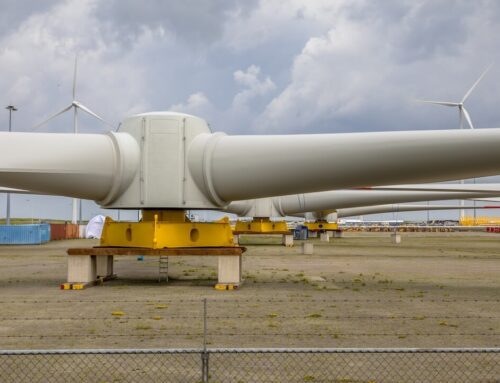
We work in an industry – offshore renewables – that is at the vanguard of green intentions. Offshore wind is now generating electricity that covers many of the world’s demands and that is laudable.
As a business owner reading this, perhaps, you may be looking for more practical strategies to save money, energy and make a difference to climate change.
The first is to look at your energy consumption.
The average UK business uses between 15,000 and 25,000 kWh of energy a year.
This can be reduced by use of natural lighting, installing LEDs, switching to an accredited green energy supplier. Costly HVAC systems (and lighting) could be made smarter, with timers etc.
Secondly consider your digital footprint.
Is your website hosted on a “green server”? The Internet is responsible for around 3.7% of global greenhouse gas emissionsOur own website is hosted by 20i, for example, that runs on 100% renewable energy.
Office technology is another factor to consider.
Are your laptops, monitors, TV screens and mobiles the most energy efficient? Do you buy new equipment or invest in refurbished or used to save the environment?
Paperless offices are another advance.
Do you actually need to print when invoices and files can all be email and cloud based?
What about your staff getting to work?
Do you encourage hybrid or remote working? Do you have a cycle to work scheme?
Carbon offsetting.
Do you invest in projects to offset carbon emissions like:
- Reforestation projects
- Investing in renewable energy
- Engaging in projects that restore biodiversity
- Investing in electric vehicle infrastructure
- Supporting recycling and composting programmes
- Investing in methane capture projects
- Purchasing carbon credits from credible carbon offset programmes
If consumers are making informed choices about where to spend their money, whether that’s B2B or B2C, putting green strategies into place will reward not only your revenue, but also the planet.
How our expert team can help you
HSEQ-360 Ltd utilise a team with wide ranging skills, competencies and experiences; including chartered engineers, chartered health and safety and chartered quality professionals. HSEQ-360 can certainly review your company’s operations and management systems and implement sustainability strategies which are reasonable and practicable for your business.
We operate a management system which is certified to ISO9001, ISO14001 & ISO45001; and we are specialists in developing bespoke management systems for your business. We can complete an environmental impact on your behalf and can provide practical recommendations on how to proceed environmentally.
For further information, please see our website or contact a member of the team on info@hseq-360.co.uk