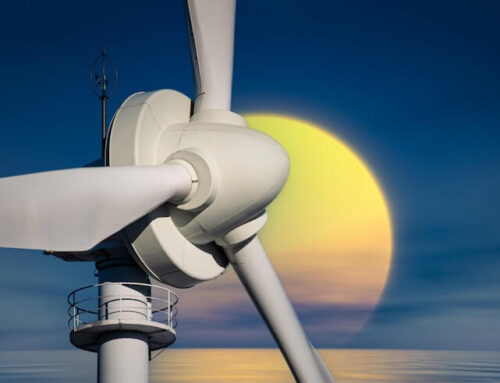
The installation of the first offshore converter station at Hornsea 3 marks a significant step forward for one of the UK’s most important renewable energy projects. For HSEQ professionals, it also highlights the scale, complexity and risk profile of modern offshore wind infrastructure.
A critical milestone in a record-breaking project
Hornsea 3, being developed by Ørsted, is set to become the world’s largest offshore wind farm, with a capacity of around 2.8 to 2.9GW, enough to power more than three million UK homes.
The recent installation of the first offshore converter station, standing approximately 70 metres above sea level, represents a major construction milestone delivered ahead of schedule.
This structure plays a pivotal role in the project. It converts the electricity generated by offshore wind turbines into high voltage direct current, enabling efficient transmission over long distances back to shore.
Why converter stations matter
Offshore wind farms of this scale cannot function without advanced transmission infrastructure. Hornsea 3 will rely on multiple converter stations, both offshore and onshore, to manage the flow of electricity.
1. Offshore platforms collect and convert power from turbines
2. Subsea cables transmit electricity over long distances to shore
3. Onshore converter stations convert power back to alternating current for grid integration
Without this process, energy losses over long distances would be commercially and technically unviable.
For HSEQ professionals, these installations introduce unique risk environments, combining high voltage systems, heavy marine lifting operations and complex offshore logistics.
Engineering at scale
The installation itself is a feat of global engineering collaboration. The converter platform consists of a jacket foundation fixed to the seabed and a topside structure housing electrical systems.
Delivered through international supply chains and installed using specialist heavy lift vessels, the process requires precise marine coordination, strict lifting and installation procedures, advanced weather and sea state planning, and multi contractor integration across jurisdictions.
This level of complexity reinforces the importance of robust HSEQ frameworks throughout design, fabrication and installation phases.
HSEQ considerations in offshore wind
Projects like Hornsea 3 underline several critical HSEQ priorities.
- High risk lifting operations require meticulous planning, competent supervision and clearly defined exclusion zones
- Electrical safety is critical, with HVDC systems demanding specialist design controls, commissioning procedures and ongoing maintenance strategies
- Marine and environmental risk management is essential due to weather exposure, vessel coordination and environmental protection requirements\
- Interface risk between contractors must be carefully managed through strong communication, documentation and alignment on safety standards
Supporting the UK’s energy transition
Hornsea 3 is part of a wider push to strengthen UK energy security and accelerate decarbonisation. It represents a major contribution to national infrastructure and the offshore wind supply chain.
As construction progresses toward expected completion in 2027, further milestones will continue to test the industry’s ability to deliver safely at scale.
Final thoughts
The successful installation of the first offshore converter station is more than just a construction update. It is a clear signal of how far offshore wind has evolved.
For HSEQ-360 Limited and the wider industry, it reinforces a truth.
As projects grow in scale and complexity, so too must the systems that keep people safe, operations compliant and risks controlled.