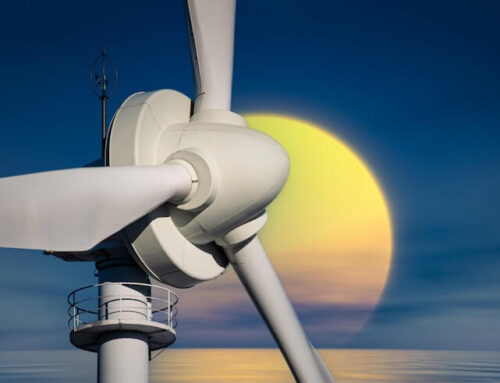
Plans for a major offshore wind farm off the coast of the Isle of Man have triggered significant public debate, highlighting the ongoing tension between renewable energy expansion and local environmental and cultural concerns. The proposed “Mooir Vannin” project, led by Ørsted, reflects wider challenges facing the offshore wind sector as it scales across the British Isles.
Project overview
The development could see up to 87 turbines installed between six and twelve miles off the island’s eastern coastline, stretching from Maughold out into the Irish Sea. With turbines reaching heights of approximately 350 metres and covering an area of around 81 square miles, the project would be one of the most visually prominent offshore wind schemes in the region.
Ørsted estimates the wind farm could generate around 1.4 gigawatts of electricity, enough to power approximately one million homes. While the majority of this energy would feed into the UK grid, a smaller proportion would support local supply on the island.
Community concerns
Opposition to the scheme has grown rapidly, with thousands backing a petition led by local campaign group Not 4 IOM. Residents have raised concerns about the visual impact of the turbines, particularly given the island’s reputation for natural beauty and its designation as a UNESCO biosphere.
Campaigners argue the scale of the development would fundamentally alter coastal views, with turbines potentially visible from Ramsey to Onchan. For many, this raises questions about the long term impact on tourism, which remains a key part of the island’s economy.
There are also concerns around marine ecosystems, fishing activity, and broader environmental disruption. Local representatives have echoed these issues, suggesting that the full implications for biodiversity and coastal heritage have yet to be fully understood.
Economic and energy considerations
From a strategic perspective, the project represents a significant investment opportunity. Ørsted has indicated the scheme could contribute approximately £2 billion to the economy over a 35 year period, alongside supporting energy security in an increasingly volatile global market.
However, critics have questioned the distribution of these benefits. A key concern is that most of the generated power would be exported to the UK, leaving the island to manage the visual and environmental impacts while receiving only a limited share of the energy output.
This raises an important issue seen across multiple offshore developments. Host communities often weigh local disruption against national or international energy gains, particularly where grid infrastructure prioritises export.
Planning and consultation challenges
The project is currently undergoing a six month independent examination process after initial acceptance by the Manx government. A final recommendation will be made to ministers, who will ultimately decide whether the development proceeds.
Some local officials have expressed concern about the consultation process, suggesting that community input has come too late in the planning cycle. This highlights a recurring challenge for large infrastructure projects, where early engagement can be critical to securing public support.
A wider industry perspective
The Mooir Vannin proposal reflects a broader shift across the UK and Irish Sea towards large scale offshore wind as part of net zero ambitions. Projects of this scale are increasingly common, particularly as governments and developers seek to accelerate renewable capacity.
For organisations operating in the health, safety, environmental and quality space, these developments bring both opportunity and responsibility. Offshore wind projects require rigorous risk management across design, installation and long term operation, particularly in sensitive marine and coastal environments.
Conclusion
The Isle of Man wind farm debate underlines a fundamental reality of the energy transition. Whilst offshore wind is essential to achieving decarbonisation goals, its success depends on balancing national infrastructure needs with local environmental, cultural and economic considerations.
As the project moves through examination, its outcome will likely serve as a case study for how future developments engage with communities, distribute benefits and manage impact. For the offshore wind sector, getting this balance right will be critical to maintaining both momentum and public trust.