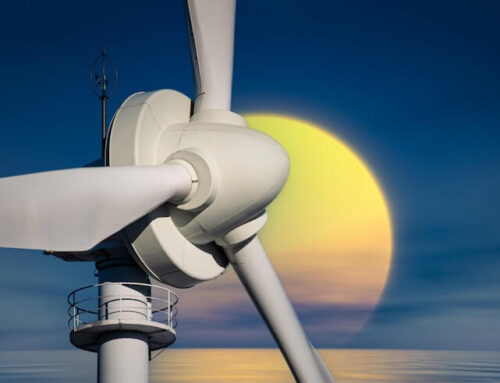
A recent wind turbine blade failure in the UK has brought renewed focus to the safety, reliability, and ongoing monitoring of wind energy infrastructure, particularly as offshore developments continue to scale in size and complexity.
At the Brechfa Forest West wind farm in South Wales, a turbine blade detached from a structure standing at approximately 475 feet. The incident occurred during normal weather conditions, with no extreme winds reported.
Whilst no injuries were recorded, the event prompted an immediate shutdown and an investigation into the root cause.
Although this was an onshore installation, the implications are highly relevant to offshore wind projects, where access, repair, and risk management are significantly more complex.
Understanding structural risk in larger turbines
Modern wind turbines are significantly larger and more powerful than previous generations, particularly across offshore projects such as Hornsea 3 and developments along the East Anglia coast.
Blades are subjected to continuous cyclic loading, harsh environmental exposure, and aerodynamic forces. Over time, this can lead to material fatigue, internal defects, or bonding failures within composite structures.
In offshore environments, these risks are amplified by saltwater corrosion, higher wind speeds, and limited access for inspection and maintenance. As a result, even minor defects can escalate – if not identified early.
Inspection and monitoring in offshore environments
The offshore wind sector has rapidly adopted advanced inspection and monitoring technologies to mitigate these risks. Traditional inspection methods are increasingly supported by drone surveys, remote sensing, ultrasonic testing, and real-time condition monitoring systems.
For large-scale projects such as Hornsea Project One and East Anglia ONE, where turbines are located miles offshore, early detection of structural issues is critical to avoiding costly failures and extended downtime.
Digital asset management systems and predictive maintenance strategies are now central to ensuring turbine reliability across their lifecycle.
HSEQ considerations across the project lifecycle
From an HSEQ perspective, this incident reinforces the importance of a proactive approach to asset integrity and risk management.
Offshore wind projects require robust frameworks that integrate design assurance, installation quality, inspection regimes, and operational monitoring. Risk assessments must account for both environmental conditions and long-term mechanical degradation.
Emergency response planning is also critical, particularly offshore where access constraints can delay intervention. Establishing exclusion zones, clear reporting structures, and rapid shutdown protocols are essential components of a safe operating environment.
Organisations such as Ørsted continue to lead the way in implementing rigorous HSEQ standards across large-scale offshore developments, setting benchmarks for the wider industry.
Supporting the safe expansion of offshore wind
The UK remains a global leader in offshore wind, with continued investment across the North Sea and Irish Sea regions. As projects grow in scale and ambition, maintaining safety and reliability will be fundamental to long-term success.
Incidents like this do not undermine the sector but instead highlight the need for continual improvement in inspection technologies, maintenance strategies, and HSEQ frameworks.
For stakeholders across offshore wind, the message is clear: strong asset integrity management, supported by innovation and disciplined execution, is essential to ensuring that renewable energy infrastructure remains safe, resilient, and fit for the future.