There’s been a long history of birds inspiring engineering design
The process does have a very fetching name too – biomimicry.
You may recall more examples than we can but three specific ones stand out from recent memory:
- The Lockheed XV-4 Hummingbird, a vertical take off and landing aircraft first launched in 1962. Yet only 2 were built and never used with the prototype crashing in 1964, tragically killing its pilot
- The Boeing 777, a more recent example of biomimicry, with wings matching those of an eagle. 5% lighter and more fuel efficient.
- Airbus is now taking inspiration from the long-eared owl, which is almost silent in flight, largely attributable to its serrated wing feathers. This is now being looked at for wings and landing gear.
In sports, like cycling, a Peloton in the Tour de France and team time trials, often mimic geese. Geese fly in skeins, a triangular formation, with geese taking it in turn to lead and bear the brunt of head winds. Goose leadership is used sometimes as an example of a non-hierarchical leadership (unlike its opposite, buffalo and bison, who become rudderless in an attack if the lead buffalo is injured or killed).
HSEQ-360 Limited find all these parallels fascinating and were intrigued to read that the offshore wind industry is looking at biomimicry.
How?
By studying and taking design cues from one of the world’s heaviest aerial birds, the Andean condor. We like keeping our readers educated so here is a summary of that bird.
The Andean Condor is a member of the vulture family, those birds who famously circle in old Western movies, ready to swoop for human and animal carrion. It is a huge bird with a wing span of 3.3 metres, a weight of 15KG and an impressive life span of some 70 years.
What’s relevant to offshore wind though is that its wingtips are curved.
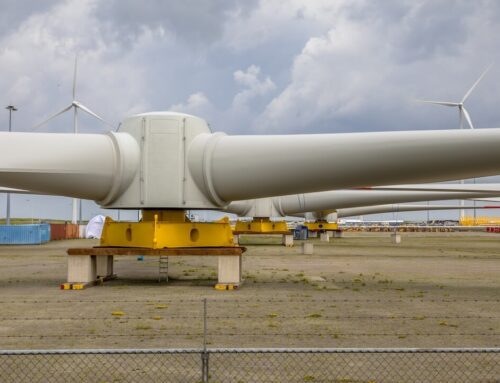
Offshore engineers are looking at this curvature in wind turbine blades. This is not simply a move in terms of aesthetics – it’s for renewable efficiency with an estimated 10% gain if wind turbines mimicked the Andean Condor.
“The addition of this novel retrofit, inspired by the world’s heaviest soaring bird, the Andean condor, aims to increase the power output of a wind turbine while requiring only a modest capital investment,” state the researchers, led by Khashayar Rahnamaybahambary of the University of Alberta. “The results indicate that the addition of this retrofit leads to an increase of 9.69% in power production.”
The condor, as well as other birds, have long inspired aircraft design, but now, we are seeing biomimicry in the offshore wind industry and we hope it’s a soaring success.
You can see a short video of the Andean condor here:
How our expert team can help you
HSEQ-360 Ltd utilise a team with wide ranging skills, competencies and experiences; including chartered engineers, chartered health and safety and chartered quality professionals. HSEQ-360 can certainly review your company’s operations and management systems and implement sustainability strategies which are reasonable and practicable for your business.
We operate a management system which is certified to ISO 9001, ISO 14001 & ISO 45001; and we are specialists in developing bespoke management systems for your business. We can complete an environmental impact study on your behalf and can provide practical recommendations on how to proceed environmentally.
For further information, please see our website or contact a member of the team on info@hseq-360.co.uk