Maine, with its rocky, 230 mile jagged Atlantic coastline, sits in the north east of the States bordering Canada to the east of the Mississippi River. It is an area with a long history of maritime fishing and agriculture, and though thinly populated, it is seeing growth in tourism and inward migration, but its largest city (Portland) remains relatively small at under 70,000.
In the forthcoming November US elections, Maine is seen as a key battleground as it is a swing state
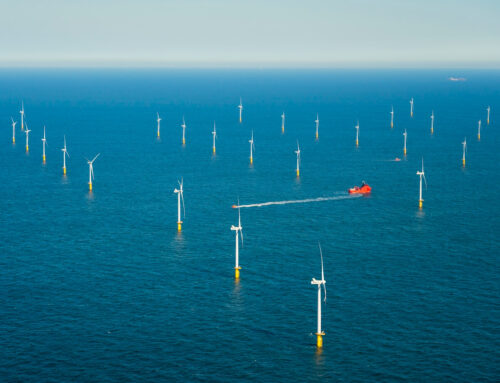
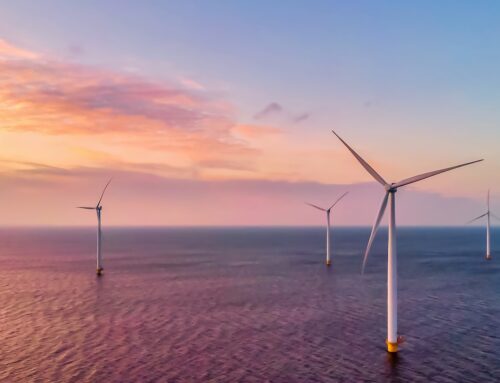
As its fishing industry has declined and population increased, there has been a heightened awareness of investment in offshore renewable energy.
Just yesterday, Monday 19th August 2024, the federal Democratic government issued the USA’s first floating offshore wind research lease, comprising about 23 square miles (60 square kilometres) in waters, southeast of Portland.
Key features include:
- Up to 12 floating turbines
- Generation of 144 megawatts of renewable energy, to power half the area
- Location is expected to be around 30 miles from Portland
- Design by the University of Maine in partnership with Diamond Offshore Wind (link)
- Turbines of 210 metres height, tethered with mooring lines
Maine waters are simply too deep for fixed turbines
In simple terms, the waters surrounding much of the States are too deep for traditional seabed fixed turbines. In fact, a potential 2.8 terawatts of wind energy is lost because of deep oceans, according to the National Renewable Energy Laboratory.
“Clean energy from offshore wind offers an historic opportunity for Maine to create good-paying jobs, reduce our reliance on fossil fuels, and fight climate change by cutting greenhouse gas emissions,” Democrat Governor Janet Mills states.
This floating offshore wind farm project is, however, in its infancy. It is anticipated that it won’t actually become operational until 2040, with design, staging, building, deployment and its maritime impact being evaluated.
Look east at Norway
Maine will, undoubtedly, be looking eastwards from its craggy coastline to Norway, who are building the world’s largest offshore wind farm from Equinor at Hywind Tampen or to Scotland (with its proposed GB Energy Hub) at Hywind Scotland, the world’s first floating wind farm, operating since 2017.
There is hope that ambitious global predictions of floating wind farms reaching 20% of all offshore wind predictions. They are more expensive to produce than traditional fixed turbines, but, as technology and adoption rates increase, these costs will fall. The advantages of floating wind farms are well documented and include:
- An ability to operate in deeper and shallower waters of just 30 metres depth
- Movement of between 20 to 50 metres from its central axis, known as surge and sway
- Lower construction and assembly costs
- Reduced downtime
- Increased global employment opportunities
This short explainer video is useful too:
Join the debate on our LinkedIn, Facebook, Twitter and Instagram channels and tell us what you think of floating offshore wind farms.
How our expert team can help you
HSEQ-360 Ltd utilise a team with wide ranging skills, competencies and experiences; including chartered engineers, chartered health and safety and chartered quality professionals. HSEQ-360 can certainly review your company’s operations and management systems and implement sustainability strategies which are reasonable and practicable for your business.
We operate a management system which is certified to ISO9001, ISO14001 & ISO45001; and we are specialists in developing bespoke management systems for your business. We can complete an environmental impact on your behalf and can provide practical recommendations on how to proceed environmentally.
For further information, please see our website or contact a member of the team on info@hseq-360.co.uk