The world’s first heavy-lift cargo drone operations at an offshore wind farm have just been launched
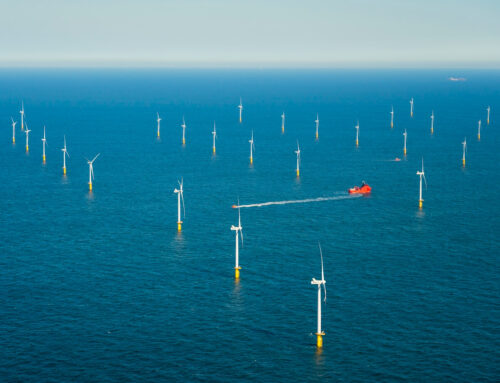
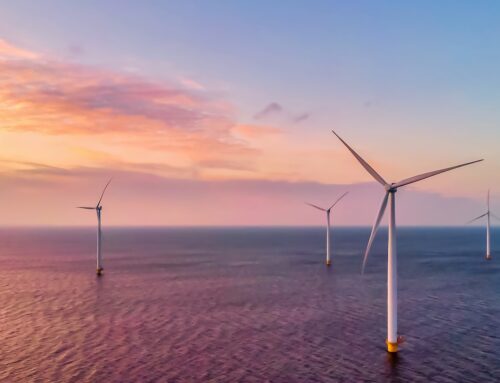
Ørsted used heavy-lift cargo drones (HLCD) in an operational campaign at the Borssele 1&2 Offshore Wind Farm, a Dutch wind farm with 75 wind turbines, close to the Belgian sea border. The HLCD will carry cargo from a vessel to these wind turbines, reducing costs and time, as well as improving operational safety and efficiency.
Drones are seen as a modern phenomenon and yet they have a longer history, than perhaps you’d imagine.
In fact, their history dates back to World War One and 1916 when the first true UAV is often considered to be the “Aerial Target,” developed in Britain by A.M. Low. This was a small radio-controlled aircraft intended as a target for training anti-aircraft gunners.
In 1918, the U.S. developed the Kettering Bug, an early cruise missile or UAV, during World War I. It was a biplane that could carry a small bomb and was designed to fly a preset distance before dropping its payload. However, it was never used in combat.
Heavy-lift cargo drones are an August 2024 landmark though:
“Ørsted has led offshore wind’s journey from a niche technology to a cost-competitive and large-scale source of renewable power,” said Rasmus Errboe, chief commercial officer and deputy-CEO at Ørsted.
“The drones at Borssele 1&2 are a great example of this, as they will improve safety, bring down carbon emissions, and reduce the cost of operating offshore wind farms, which all further improve the commercial fundamentals of offshore wind for investors, governments, and corporations.”
But what are heavy duty lifting drones?
Heavy-duty lifting drones are specialised unmanned aerial vehicles (UAVs) designed to carry and transport significant payloads. Unlike regular consumer drones that can typically lift a few kilograms at most, heavy-duty lifting drones are engineered to handle much larger weights, sometimes hundreds of kilograms. These drones have various applications across industries, including offshore construction, agriculture, logistics, and emergency response.
Key Features
1. High Payload Capacity: heavy-duty drones are built with strong frames and powerful motors to carry large payloads. Payload capacities can range from 10 kg (22 lbs) to over 200 kg (440 lbs) or more.
2. Powerful Propulsion Systems: these drones typically have multiple rotors (e.g., octocopters, dodecacopters) for increased lift and stability. The motors are much more powerful than those found in consumer drones.
3. Durable Construction: made from materials like carbon fibre and aluminium, these drones are designed to be lightweight yet incredibly strong. This construction ensures they can handle the stress of lifting heavy loads.
4. Advanced Flight Control Systems: to manage the complexities of flying with a heavy payload, these drones come equipped with sophisticated flight control systems that include GPS, altitude hold, obstacle avoidance, and even autonomous flight capabilities.
5. Extended Flight Times: although flight time is generally reduced when carrying heavy loads, these drones often have larger batteries or hybrid power systems (combining batteries with fuel cells) to extend their operational time.
6. Safety Features: redundancies such as multiple motors, backup power systems, and fail-safe mechanisms are crucial for heavy-duty drones to ensure safe operations in case of equipment failure.
Examples
1. Griff Aviation: Griff Aviation’s drones, like the Griff 300, are known for their ability to carry up to 300 kg (660 lbs) of payload.
2. Volocopter’s VoloDrone: designed for urban air mobility and logistics, the VoloDrone can carry payloads up to 200 kg (440 lbs) and has a range of up to 40 km (25 miles).
3. Skyf Drone: the Skyf heavy-lifting drone has a payload capacity of up to 250 kg (550 lbs) and is primarily used for logistics, agriculture, and disaster relief.
Challenges
Regulations: due to their size and capabilities, these drones are subject to stringent regulatory requirements, particularly regarding airspace usage and safety protocols.
Costs: the advanced technology required for heavy-duty lifting drones makes them expensive to produce and operate.
Battery Life: while these drones are powerful, the weight of their payloads can significantly reduce flight time, which is a limiting factor in some operations.
Heavy-duty lifting drones represent a significant advancement in UAV technology, opening new possibilities for industries that require heavy lifting in challenging environments.
When the history of drones is being rewritten, it is fantastic that Ørsted will be a key part of that timeline, along with their other offshore wind advances.
How our expert team can help you
HSEQ-360 Ltd utilise a team with wide ranging skills, competencies and experiences; including chartered engineers, chartered health and safety and chartered quality professionals. HSEQ-360 can certainly review your company’s operations and management systems and implement sustainability strategies which are reasonable and practicable for your business.
We operate a management system which is certified to ISO9001, ISO14001 & ISO45001; and we are specialists in developing bespoke management systems for your business. We can complete an environmental impact on your behalf and can provide practical recommendations on how to proceed environmentally.
For further information, please visit our website or contact a member of the team on info@hseq-360.co.uk