Blyth has long been associated with heavy industry, shipbuilding and coal exports, but today the Northumberland town is becoming something very different: a symbol of Britain’s offshore wind future and the skills transformation needed to support it.
As the offshore renewables sector continues to expand across the UK coastline, training and workforce development are becoming just as important as turbines, substations and ports. That is where Blyth is carving out a national reputation.
The town already has deep offshore energy credentials. The Port of Blyth has evolved into one of the UK’s leading offshore energy hubs, supporting offshore wind, subsea engineering and renewable energy projects across the North Sea.
Importantly, Blyth is not just attracting infrastructure investment – it is investing in people.
Training for real-world offshore environments
One of the strongest examples is the development of specialist offshore wind training facilities designed to prepare workers for the realities of the sector.
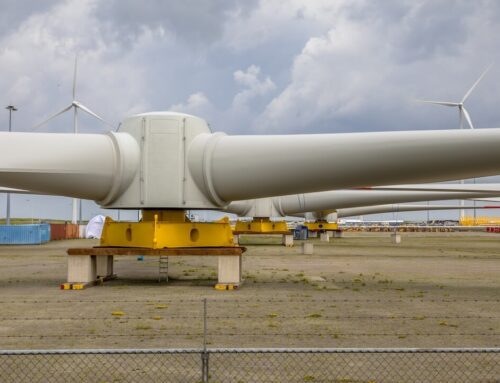
Training environments now include former operational wind turbines repurposed for practical instruction, alongside dedicated classrooms and simulation facilities aimed at supporting the next generation of offshore technicians.
That hands-on approach matters.
Offshore wind is a highly technical industry where safety, competence and real-world operational awareness are critical. Workers are expected to operate in challenging marine environments, often at height, in difficult weather conditions and around complex electrical and mechanical systems.
Training therefore goes far beyond theory
Modern offshore programmes increasingly focus on:
• Working at height
• Emergency rescue procedures
• Mechanical and electrical maintenance
• Marine safety awareness
• Human factors and behavioural safety
• Digital diagnostics and monitoring systems
• HSEQ leadership and compliance culture
The role of HSEQ in offshore wind
For companies like HSEQ-360 Limited, the continued growth of offshore wind highlights the increasing importance of competent, safety-conscious workforces across every stage of a project.
HSEQ-360 Limited supports organisations across the offshore and renewable energy sectors with health, safety, environment and quality consultancy, helping businesses strengthen compliance, operational standards, workforce culture and risk management in demanding environments.
As offshore wind projects become larger and more technically complex, strong HSEQ leadership becomes essential not only for compliance, but for operational performance, contractor management and long-term project success.
Safety is no longer viewed simply as a box-ticking exercise. It is becoming embedded into workforce culture from the very start of a person’s career.
Supporting coastal regeneration
Blyth’s Energy Central Campus is another major example of this ambition. The initiative brings together industry, education providers and local authorities to create specialist pathways into offshore renewables, including technical diplomas, T-levels and higher education opportunities linked directly to the energy sector.
This is particularly significant for coastal communities.
For decades, many former industrial towns faced economic uncertainty as traditional industries declined. Offshore wind is now creating an opportunity for regeneration, high-skilled employment and long-term economic resilience.
Building the future workforce
The UK offshore wind sector already supports thousands of jobs, and with further projects planned around the British coastline, demand for skilled personnel will continue to rise sharply over the coming decade.
Major industry events are increasingly focusing not only on technology and investment, but also on workforce capability, skills shortages and future training needs.
Blyth demonstrates what successful energy transition can look like when infrastructure investment is matched by investment in people.
Because offshore wind is not only about generating renewable energy; it is also about creating competent, safety-conscious and highly skilled workforces capable of supporting one of the UK’s fastest-growing industries for decades to come.