A traffic jam when you’re already late
A “No Smoking” sign on your cigarette break
It’s like ten thousand spoons when all you need is a knife
It’s meeting the man of my dreams
And then meeting his beautiful wife
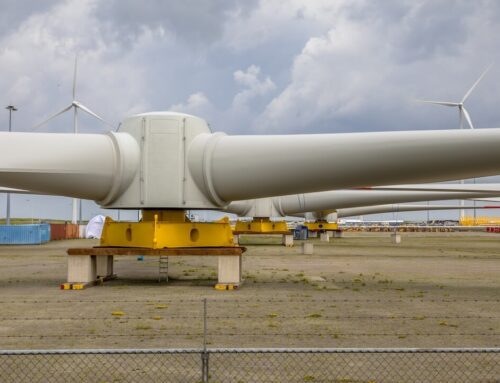
No prizes for guessing the song and artist from the lyrics above. “Ironic” by Alanis Morrissette, released almost 30 years ago, in 1996, which is older than the current longevity of wind turbine blades. These typically have a life span of 20 to 25 years before they have to be removed, replaced, landfilled or recycled.
Just as we’re recycling songs in our first blog post of February 2025, an article caught our eye at HSEQ-360 Limited, that bodes well
It is, arguably, ironic that wind farms, a beacon of green, renewable energy has a big problem on its hands with end of life blades and other components. There’s been innovative practice in some recycling examples – the Dutch, for example, have instances of repurposing redundant blades in sculptures, and even parks as play equipment and bridges. After all, if these can withstand the corrosive and often wild conditions at sea, a slide, or swing, or bench shouldn’t present longevity issues in a tamer environment.
The article in question, though, revealed some experiments taking place in China
China, in case, you didn’t know, is the world’s largest producer of wind turbine blades, playing a crucial role in the global renewable energy industry. Chinese companies, such as Goldwind and Sinoma, manufacture blades using advanced composite materials, ensuring durability and efficiency. The country’s massive investment in wind energy has driven innovation, including the development of longer, lighter, and more efficient blades. However, challenges remain, including the environmental impact of blade disposal and geopolitical concerns over supply chain dependencies. As China continues to dominate wind power production, it is also exploring recycling solutions to address the growing issue of decommissioned turbine blades.
Made from glass fibre, carbon fibre, and epoxy resin, retirement brings with it a host of issues – and, now, solutions
A research team led by Tang Zhicheng at the Lanzhou Institute, operating under the Chinese Academy of Sciences, has developed a method to repurpose retired wind turbines into valuable materials for the construction industry.
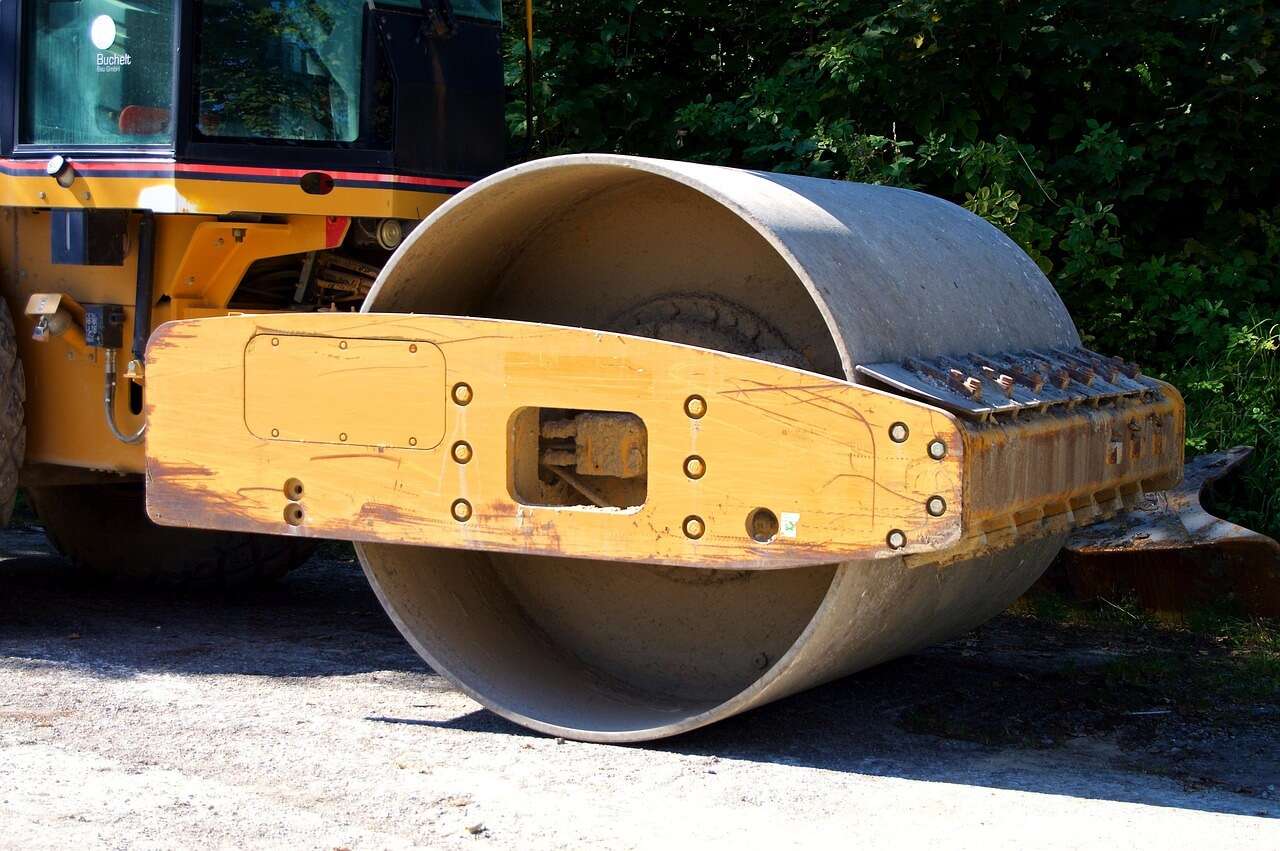
To address this challenge, Tang’s team aimed to transfer the high strength and corrosion-resistant properties of turbine blades to urban construction. Through a combination of physical crushing and chemical treatments, they successfully integrated turbine blade materials into cement and asphalt mixtures. These can then be used in road construction.
Testing has been taking place since September 2024 and the results look promising so far
If this crushing and repurposing is adopted globally, perhaps we will see our own local Scroby Sands offshore wind farm, located off the coast of Great Yarmouth, UK, underfoot or under car? This landmark, as approaching the east coast down the Acle Straight, has an expected lifespan of around 20 to 25 years.
Scroby Sands nears its expected end date
Commissioned in 2004, the wind farm consists of 30 Vestas V80 turbines, each with a capacity of 2 MW, generating renewable energy for thousands of homes. As it approaches the later stages of its operational life, considerations for refurbishment, repowering, or decommissioning are becoming increasingly important.
Perhaps the ongoing battle cry for a new Primark in Great Yarmouth and an access road that is notorious locally, and single carriageway, will bring some recycled life in turbine blade death to a town that is looking to reinvent itself, after many years of decline.
The visible landmark may well disappear on the flat horizon by 2029 (just 4 years away) but the main road to it, may be a green corridor.
And isn’t it ironic?
Don’t you think?
A little too ironic
And yeah, I really do think.
Roads are rarely green, wind turbines are a green energy solution and now we have Chinese innovation set to marry the two together.
At HSEQ-360 Limited, we look forward to this innovation.
How we can help you
HSEQ-360 Limited, a team of chartered engineers, health and safety, and quality professionals, can assist your offshore company in enhancing its operations and management systems. We can conduct a thorough review of your company’s processes and implement sustainable strategies tailored to your business’s specific needs.
Our management system is certified to ISO9001, ISO14001, and ISO45001, and we specialise in developing bespoke management systems for businesses. We can conduct an environmental impact assessment on your behalf and provide practical recommendations for environmentally friendly practices.
For more information, please visit our website, follow our active LinkedIn channel, or contact a member of our team at info@hseq-360.co.uk.