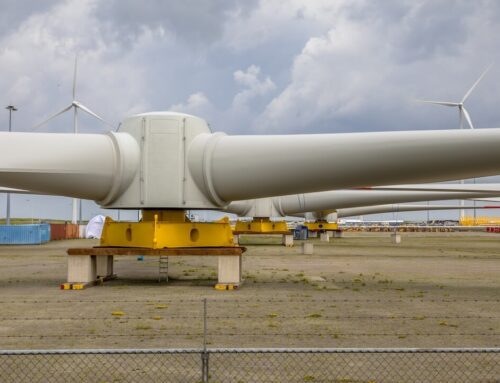
In our second March blog post, HSEQ-360 Limited looks at the unassuming Suffolk town of Lowestoft, just down the road from our Beacon Park base, following the popularity of our December blog post on its rival, Great Yarmouth.
Nestled on the easternmost edge of England, Lowestoft is a town rich in maritime heritage, innovation, and industry.
As a key player in the offshore wind sector today, Lowestoft’s history of seafaring and engineering makes it a natural hub for renewable energy developments. HSEQ-360 Limited takes pride in supporting industries that drive sustainability and safety, and there’s no better place to explore the past, present, and future of offshore wind than in Lowestoft.
Lowestoft’s Offshore Wind Industry
Lowestoft is at the forefront of offshore wind development in the UK. The town serves as a strategic base for major wind farms in the North Sea, providing operations and maintenance support to projects such as the East Anglia ONE and TWO wind farms.
Home to major energy firms and the state-of-the-art OrbisEnergy hub, Lowestoft continues to grow as a centre of excellence in the offshore renewable sector. This thriving industry not only provides employment but also strengthens the town’s reputation as a leader in green energy.
A Rich Maritime and Fishing Heritage
Before offshore wind, Lowestoft was known for its fishing and shipbuilding industries. During the 19th and early 20th centuries, it was one of England’s most significant fishing ports, famous for its herring trade. Although the industry has declined, the town’s connection to the sea remains a defining feature, with remnants of its fishing past visible along the historic waterfront and at the Lowestoft Maritime Museum. Oulton Broad once had an International Boatbuilding Training College, opened in 1975, that sadly closed at the end of 2024.
Famous People from Lowestoft
Lowestoft has produced notable figures across various fields. One of the most famous is Sir Samuel Morton Peto, a 19th-century railway pioneer and civil engineer, who played a key role in developing the town’s infrastructure.
In the world of music, Lowestoft is the birthplace of rock band The Darkness, known for their flamboyant style and hit song I Believe in a Thing Called Love.
Another well-known figure is Benjamin Britten, the celebrated composer, who lived nearby in Aldeburgh but had strong ties to the Suffolk coast, influencing the region’s cultural heritage.
Samuel Peto has a road named after him, and Benjamin Britten is a well-regarded high school academy in Gunton, north of Lowestoft, as well as a small shopping centre.
Charles Dickens once lived in Blundeston, an attractive rural village and set the chase scene in “David Copperfield” on the beach at Great Yarmouth and featured a family called Peggotty, a name associated still with the town. He also used to walk to Norwich from Blundeston, something we see as oddly eccentric today.
Landmarks of Lowestoft
Lowestoft boasts several landmarks that reflect its rich history and evolving industry.
- Lowestoft lighthouse: dating back to 1609, this lighthouse has guided sailors safely along the coast for centuries.
- The Scores: a network of historic walkways leading from the town centre to the seafront, offering glimpses into Lowestoft’s past. These are similar to the rows in its rival maritime town, Great Yarmouth.
- Africa Alive!: while not in the town centre, this wildlife park is a popular attraction just outside Lowestoft, showcasing conservation efforts.
- OrbisEnergy: a symbol of Lowestoft’s modern identity, this innovation centre drives offshore renewable energy developments.
- The Gulliver wind turbine in Lowestoft, Suffolk, is a notable landmark and a symbol of the region’s commitment to renewable energy. Installed in 1992, Gulliver was one of the first wind turbines in the UK and stood at a height of 42 metres with a rotor diameter of 29 meters. Located at Ness Point, the easternmost point of the UK, the turbine played a pioneering role in the development of wind energy technology. Although it was decommissioned in 2022 due to advancing turbine designs and efficiency improvements, Gulliver remains an important part of Lowestoft’s renewable energy history.
Four key advantages of Lowestoft:
- Lowestoft Eastern Energy Facility (LEEF): this £35 million upgrade to the Port of Lowestoft is designed to support the growing offshore energy industry, particularly operations and maintenance (O&M) and construction activities.
- Proximity to Offshore Wind Farms: the Port of Lowestoft is strategically located close to key offshore wind sites, including Greater Gabbard and East Anglia ONE.
- Operations and Maintenance Base: Lowestoft is home to the operations and maintenance base for SSE’s Greater Gabbard offshore wind farm and ScottishPower Renewables’ East Anglia ONE.
- ScottishPower Renewables’ Investment: ScottishPower Renewables has confirmed Lowestoft as the long-term home for its UK offshore wind operations, with a multi-million pound investment in the town’s PowerPark.
Benefits for Lowestoft:
- Economic Opportunities: the growth of the offshore energy sector in Lowestoft is expected to bring significant economic opportunities to the town and the region.
- Job Creation: the new facilities and investments are expected to create long-term employment opportunities in Lowestoft.
- Renewable Energy Transition: Lowestoft is poised to become a leading centre for offshore wind expertise, playing an essential role in shaping the future of sustainable energy in the UK.
- Local Supply Chain: the LEEF facility is designed to support the local supply chain and ensure that local businesses can benefit from the growth of the offshore energy sector.
The Future of Offshore Wind in Lowestoft
With the UK committed to expanding offshore wind capacity, Lowestoft is well-positioned for future growth. Investments in port infrastructure, new training facilities, and green technology make the town a crucial hub for offshore wind expansion.
At HSEQ-360 Limited, we recognise the importance of safety, environmental responsibility, and sustainable growth in offshore industries. As Lowestoft continues to innovate, we remain committed to supporting the professionals and companies shaping the future of renewable energy.
From a fishing heritage to a renewable energy powerhouse, Lowestoft’s evolution is a testament to its resilience and adaptability. The town’s legacy as a maritime leader continues today, not in the form of herring fleets, but through the turbines that harness the power of the North Sea.
HSEQ-360 Limited provides expert support in health, safety, environmental, and quality management across the offshore and renewable energy sectors. To learn more about our services, visit our services page or get in touch today.