The world’s biggest wind farm is fully operational
Hornsea itself is an unassuming coastal town in East Yorkshire, with a population of under 9000 and known best perhaps for its large freshwater lake, the Hornsea Mere. With 250 species of birds, 2 miles in length and is incredibly shallow, with 12 feet being its deepest point. It’s a very pleasant town, north of Hull and south of Scarborough, but in recent years, the name Hornsea has become synonymous in renewable circles as a behemoth of wind power.
So big in fact it has an original – Hornsea 1 – and a sequel – Hornsea 2.
Orsted has recently announced that Hornsea 2 is now fully operational and its a remarkable feat of engineering.
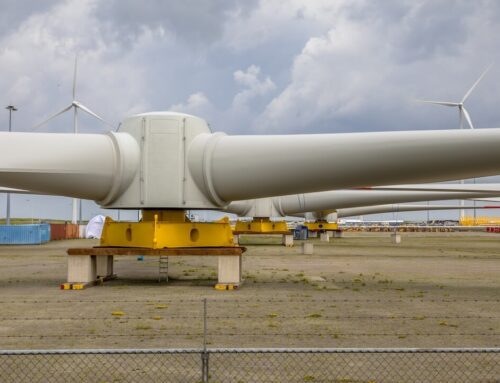
Hornsea 2 has a capacity of more than 1.3 gigawatts and stretches across an area of 462 square kilometres — more than half the size of New York City. Hornsea 2, it added, uses Siemens Gamesa turbines with blades measuring 81 meters, or more than 265 feet.
“One revolution of the wind turbine blades can power an average UK home for 24 hours,” the company says.
The explainer video from Orsted is worth a watch:
The Hornsea 2 project has taken over 5 years from inception to completion and is the UK’s biggest – but for how long?
Dogger Bank, when completed in 2023, will eclipse it.
Hornsea 2 has been in the making since October 2012, when a scoping report was commissioned. It was expected to be developed in several phases, with a potential wind turbine capacity of 1.8 GW, in an area of around 400 square kilometres (150 sq mi) located in the centre of the Hornsea wind farm zone. Project 2 was planned to use the same route for its electrical export cable as Project One, and to use either HVAC or HVDC with a separate onshore substation.
Suitable areas for the Project 2 development were identified as being adjacent to the north, east or west of the Zone 1, which was in the shallowest area of the whole Hornsea zone.
By the time construction commenced in 2020, the selected area was to the east and north of Hornsea One and the specification had been set as 165 8 MW turbines giving a rated capacity of 1.4 GW. By April 2021, a third of the turbine foundations had been installed and the remaining turbines were installed during the second half of 2021.
Hornsea Two has two diesel-electric crew ships and having completed the offshore substation, first operational power was achieved by 20 December 2021, and became fully operational about a month ago, in August 2022. By doing so, Hornsea Project 2 overtook Hornsea One as the largest offshore wind farm in the world.
At HSEQ-360 Limited, we welcome the completion and given the global instability with the Russia – Ukraine war causing rising energy prices, anything that weans the UK off fossil fuels is welcomed.
“Current global events highlight more than ever the importance of landmark renewable energy projects like Hornsea 2, helping the UK increase the security and resilience of its energy supply and drive down costs for consumers by reducing dependence on expensive fossil fuels,” said Duncan Clark, head of the U.K. region at Orsted.
We agree, and look forward in due course to creating Written Schemes of Examination at Hornsea 2, as we have recently at Hornsea 1 for Service Lifts, Davit Cranes and Pressure Systems.