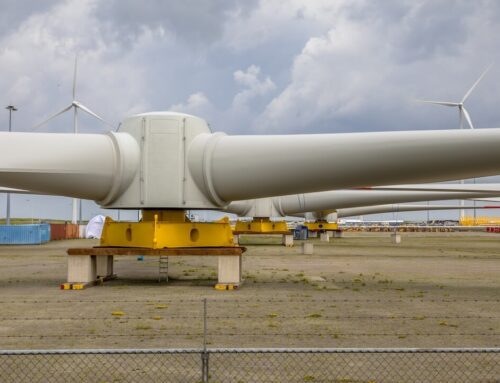
As the global transition to renewable energy accelerates, a new challenge has emerged that often goes unnoticed. What happens to wind turbines when they reach the end of their lifespan? While metals and electrical components are relatively easy to recycle, the fibreglass and composite materials used in turbine blades and nacelles are far more difficult to process. Many end up in landfills, where they take up space and resist decomposition, or are incinerated, creating additional emissions. This issue is growing as more turbines built in the early 2000s are decommissioned. Finding a sustainable solution has become a priority.
One recent project has shown what is possible when creativity, engineering and sustainability come together
During Dutch Design Week, the energy company Vattenfall partnered with the architects at “Superuse Studios” to transform a retired wind turbine nacelle into a fully functioning micro home. The nacelle, once the powerhouse of a V80 2MW wind turbine, was redesigned and fitted with everything required for modern living. The project was given the name “Nestle,” a play on the word nacelle and a fitting description of a compact and comfortable living space.
The dimensions of the structure are modest, at just three and a half metres wide, four metres high and ten metres long, providing about thirty five square metres of usable space. Despite its size, the home is fully compliant with building codes and includes a lounge area, a bathroom and a kitchenette. It also integrates renewable systems including solar panels, solar water heating and a heat pump to regulate the indoor climate.
What was once an industrial component designed solely to generate electricity has now been repurposed into a sustainable home with its own clean energy systems
For HSEQ professionals, this project is a valuable case study in how circular economy principles can be applied in practice. The reuse of the nacelle avoids the environmental cost of disposal and the resource demands of building a new structure from scratch. It also shows that high quality outcomes can be achieved without compromising on safety or compliance. Meeting strict building standards was a central part of the design, proving that sustainable innovation can operate within the same regulatory framework as traditional projects.
The health and safety implications are also significant. By removing turbine parts from waste streams, risks associated with storage, handling and disposal are reduced
Repurposing these materials into new uses also avoids the environmental hazards linked with long term landfill storage or incineration. In this way, the project protects both people and the environment while delivering a practical new application.
From an environmental perspective, the benefits are clear
Extending the life of turbine components reduces waste, conserves raw materials and minimises the carbon footprint associated with construction. With projections suggesting millions of tonnes of turbine blades could be decommissioned globally by 2040, scalable solutions are urgently needed. The Nestle home demonstrates how discarded infrastructure can be turned into valuable assets rather than costly liabilities.
Quality and compliance also stand out as lessons for industry. Too often, experimental projects are dismissed as unworkable because they are thought to fall outside regulatory boundaries. In this case, the design team showed that innovation and compliance can be achieved together. The result is a home that is not only sustainable but also safe, reliable and legally sound. For organisations seeking to integrate circular economy thinking into their HSEQ systems, this example provides reassurance that high standards do not need to be compromised.
Finally, the project illustrates the importance of collaboration. It was only through cooperation between energy providers, architects and sustainability specialists that the concept moved from idea to reality. For businesses managing complex HSEQ challenges, partnerships like this can unlock new opportunities and fresh perspectives.
The transformation of a wind turbine nacelle into a micro home is more than a creative design story. It is a practical demonstration of how health, safety, environmental and quality considerations can be combined with circular design principles to address one of the most pressing waste issues in renewable energy.
For HSEQ-360 Limited, the lesson is obvious
By embedding circular economy thinking into everyday practice, organisations can protect people, safeguard the environment, ensure compliance and drive innovation. The Nestle project provides a blueprint for how industry can turn end of life challenges into sustainable opportunities.