Wood.
One of the most natural materials known to mankind.
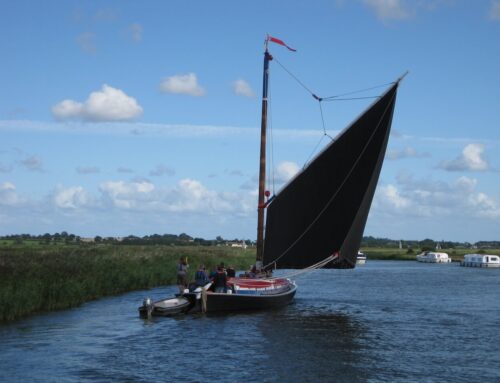
Used for boat building, homes and the early forebears of the wind turbine – windmills.
We have lots of historic wooden windmills near our HQ in Norfolk – few are still working, but several are now great tourist attractions like:
- Horsey Windpump, Great Yarmouth
- Bircham Windmill, King’s Lynn
- Thrigby Post Mill, Great Yarmouth
- Cley Windmill, Holt
- Hardley Windmill, Norwich, Norfolk
- Herringfleet Marshmill, Lowestoft, Suffolk
Learn from the past
They say though sometimes progress is about looking backwards and learning from the past and Sweden has done just that and used wood for new wind turbines in Skara.
Modvion are leading the way.
We’ve posted many updates over the past few years on what can be done with end-of-life wind turbines. They’ve been imaginatively repurposed in the Netherlands, for example, into play equipment, civil engineering projects and public sculpture pieces.
But wood opens all sorts of sustainable avenues at their end of life
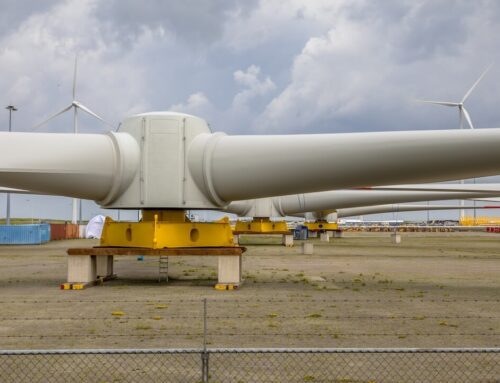
Now don’t be expecting these new wind turbines to be modest structures with low outputs. No these are wooden behemoths 150 metres tall, built partly in a factory near Gothenburg and then fully assembled on site.
Think of an IKEA Billy bookcase – but with blades and on steroids.
Wooden turbines
Each turbine blade has varied grains of 3mm-thick layers of spruce, to regulate wall’s strength and flexibility.
“It’s our secret recipe,” says company co-founder, David Olivegren, of startup Modvion.
Each layer is glued and compressed.
“Wood and glue is the perfect combination, we’ve known that for hundreds of years,” Olivegren says. “And because using wood is lighter [than steel] you can build taller turbines with less material.”
This makes the structures easier to transport, like your trips to IKEA, and assembled fully on site in remote locations (think Milton Keynes to Great Yarmouth!)
Modvion backed by Vestas
Modvion has the backing of Vestas, who know a thing or two about offshore and onshore wind technology.
Jan Hagen, Vesta’s CTO for northern and central Europe, sees “tremendous potential” in the market for taller turbines, with wooden turbines “particularly well suited” to play a role.
“What we find interesting about this is that its combination of an economically viable solution that addresses the transport bottleneck and a sustainable solution,” Hagen says.
SSE watching
SSE are watching closely at the ambitious development from Modvion and Vestas, as we and the whole industry is. Taller turbines are planned, with a facility being open to produce 100 wooden turbines per annum by 2027.
“The industry is currently putting up 20,000 turbines a year,” Otto Lundman, the CEO of Modvion says. “Our ambition is that in 10 years time 10% of those turbines – about 2000 – will be wooden.”
Now to go all Beach Boys as we wax lyrical about this:
Woodn’t it be nice if we were older?Then we wood not have to wait so longAnd woodn’t it be nice to live togetherIn the kind of world where we belong?
How our expert team can help you.
HSEQ-360 Ltd utilise a team with wide ranging skills, competencies and experiences; including chartered engineers, chartered health and safety and chartered quality professionals. HSEQ-360 can certainly review your company’s operations and management systems and implement sustainability strategies which are reasonable and practicable for your business.
We operate a management system which is certified to ISO 9001, ISO 14001 & ISO 45001; and we are specialists in developing bespoke management systems for your business. We can complete an environmental impact study on your behalf and can provide practical recommendations on how to proceed environmentally.
Active on social media, we are always responsive and personable.
For further information, please see our website or contact a member of the team on info@hseq-360.co.uk