At HSEQ-360 Limited, we’ve blogged several times about the emerging technology, as well as pros and cons of floating wind farms.
News that caught our team’s eye from Equinor and Hywind confirmed a solid (not floating) advantage – relative ease of maintenance.
It seems, perhaps, to an untrained eye, that floating wind technology is a brand new innovation, though it’s not and in a nice symmetrical touch, the repairs, which we will come on to, are at the world’s ever floating wind farm – Hywind Scotland that was officially launched in 2017.
Located off the coast of Peterhead, Aberdeenshire, in Scotland, Hywind Scotland was developed by Norwegian energy company Equinor (formerly Statoil). It consists of five floating turbines with a total capacity of 30 MW, capable of powering around 20,000 homes.
How floating wind farms work
Unlike traditional offshore wind farms, where turbines are anchored to the seabed, floating wind farms use floating platforms tethered to the ocean floor with mooring lines. This technology allows wind farms to be installed in deeper waters, where wind speeds are often stronger and more consistent. Hywind Scotland was a significant milestone in the renewable energy sector, demonstrating the potential of floating wind technology in harnessing offshore wind resources from deeper and more challenging waters.
That is one obvious advantage – their use in deeper, less accessible waters, though there are clear disadvantages:
1, Higher costs – due to the complexity of the floating platforms, mooring systems, and grid connection infrastructure
2. Greater technical challenges as they are often used in harsher marine environments
3. Maintenance ad accessibility issues are often costlier and more complex, requiring specialised personnel, vessels and equipment
4. Grid connection issues (undersea cables carry a financial premium)
Hywind is up and running again
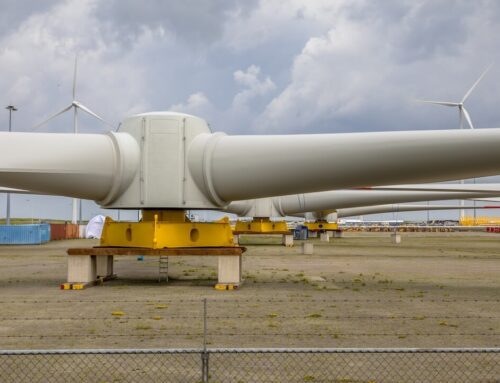
The five wind turbines at Hywind Scotland are now, though, fully working and connected because of the work carried out on their maintenance. This involved towing them to the Wergeland Base, Gulen, Norway, with them being towed back, fixed and ready to generate 30 MW of green energy.
Sterling (or Krone work) by Equinor, Sarens and Hywind Scotland
In a great example of collaborative work, often seen in our offshore wind sector, Belgian heavy lifting and engineering company Sarens were commissioned to replace the bearings in the five turbines. They also provided:
1. Cranes to lift and transport the turbines’ nacelles and blades
2. The delivery of a skidding system to move the generator in and out of the workshop
Heavy lifting work of the highest order by Sarens and Equinor
“As the world’s first floating offshore wind farm, Hywind Scotland has demonstrated the immense potential of floating wind. Through this maintenance campaign, we’ve gained valuable insights that will help us refine maintenance practices and optimise this technology for the future. By sharing our learnings, we aim to contribute to the growth and development of the floating wind industry”, said Trine Ulla, Equinor VP of UK operations.
Scotland is leading the green way
As well as the nascent formation of GB Energy, Amazon’s proposed investment in the Moray Firth, we can now add the quick repair of the world’s first floating wind farm.
How HSEQ-360 Limited can help your offshore company
HSEQ-360 Ltd utilise a team with wide ranging skills, competencies and experiences; including chartered engineers, chartered health and safety and chartered quality professionals. HSEQ-360 can certainly review your company’s operations and management systems and implement sustainability strategies which are reasonable and practicable for your business.
We operate a management system which is certified to ISO9001, ISO14001 & ISO45001; and we are specialists in developing bespoke management systems for your business. We can complete an environmental impact on your behalf and can provide practical recommendations on how to proceed environmentally.
For further information, please see our website, follow our active LinkedIn channel, or contact a member of the team on info@hseq-360.co.uk